
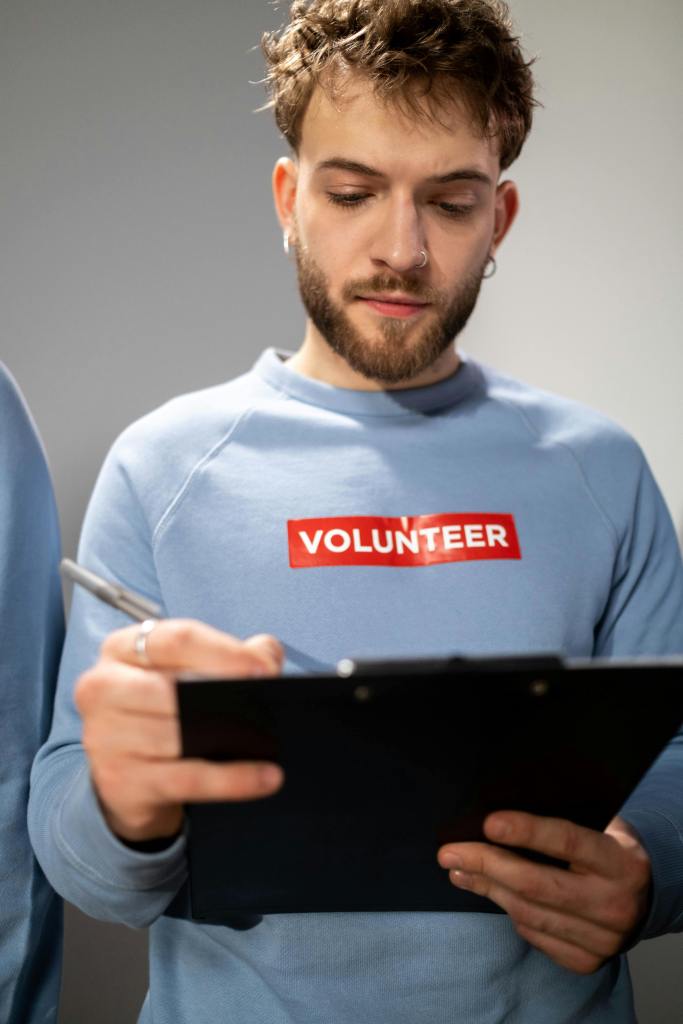
Photo by cottonbro studio on Pexels.com
Michelle Cleveland1, Debra Gray2, Rachel Manning3, and Kim Bradley-Cole4
1University of Chichester, UK, 2Kingston University, London, UK, 3University of Worcester, UK, 4University of Winchester, UK
“We want to volunteer because we want to be part of making the difference”
“We are all there for each other”
“I’m doing this because I don’t want to let my colleagues down”
Experiences of volunteering often highlight depth of commitment. This commitment is often collective in nature: We do it together, we do it for others. We do it because we are part of a ‘we’. And yet, while experiences of volunteering often highlight the profound impact on – or, indeed, how volunteering is part of – people’s identities, volunteers leave. So how well do we understand what volunteers expect from the organisations they give their time to?
Commitment to volunteering is finite and breakable. Volunteering commitments are not straightforward commitments: they are often conditional and are part of reciprocal expectations. Volunteer-organisation relationships also differ from employee-employer relationships in a variety of fundamentally different ways (Nichols, 2013). Volunteers don’t leave because they will get paid more somewhere else.
The nature of psychological contracts.
Concerns around why volunteers stay (or not) highlight the importance of ‘psychological contracts’: the set of individual beliefs a person has in relation to the reciprocal obligations and benefits established in a relationship of exchange. Psychological contracts are not about formal agreements but instead focus on the expectations people have regarding the organisations they are involved with.
Research on psychological contracts has traditionally focused on employer-employee relationships. Volunteer-organisation relationships are more informal in nature, have a different power dynamic, and are often more value-based. We must therefore be cautious of straightforwardly applying concepts developed in the employment domain to volunteers.
Examining volunteers’ psychological contracts
In our recent article in NVSQ (Cleveland et al., 2025) we look at how the concept of the psychological contract might provide a useful lens through which to examine volunteer expectations. In addition, we use the advent of the COVID-19 pandemic to look at both commonalities across volunteering contexts, and the ways in which crisis situations might shine a spotlight on specific elements of the psychological contracts of volunteers.
In our study we interviewed 72 volunteers in the South of England (53 pre-pandemic, 19 during the first national lockdown), aged between 18 and 85 to provide an in-depth examination of their experiences of volunteering. We asked volunteers about their volunteering experiences, with a focus on their relationships with the volunteer organisations and how they managed their volunteering roles. We then used ideas relating to psychological contracts to inform our analysis of the data, producing themes denoting different dimensions of volunteer experiences.
Four common expectations
Across the dataset, four common themes were produced that were evident across both contexts, which we set out below.
Firstly, volunteers expected collective commitment. They wanted to feel part of a team where everyone shared an obligation to support each other. This is illustrated by the sentiment that volunteers didn’t want to ‘let their colleagues down’. Thus, volunteers’ loyalty was not to an abstract organisation but was about not failing the people they were with.
Volunteers also expected shared values. Volunteers described themselves and their peers as united by common values and motives. This included wanting to be part of something that made a difference, and improving their communities. Having values that align with the organisation helps to fulfil the psychological contract and helps to retain volunteers when contracts are breached or violated (Kappelides et al., 2023).
Thirdly, volunteers expected support from both the organisation and their peers. Volunteers expect the organisation to facilitate friendships and social support. Volunteers in our study saw peer support as a fundamental expectation, which in turn contributed to their willingness to stay. They described them as “like close friends”. Conversely, volunteers having more negative experiences often linked this to an absence of friendship, feeling unsupported, uncertain about their role, or like an outsider.
In addition, volunteers expected their role boundaries to be respected. Volunteering for many exists alongside a range of other life commitments, in particular work and family. Volunteers expected organisations to be open and honest about time commitment, and to respect volunteers’ boundaries. Time commitment was raised by several participants as a barrier to volunteering or a reason for leaving.
Volunteering in times of crisis
As we have noted, these expectations were common across both time points in our study. However, there were some additional distinct aspects of volunteering highlighted by participants during COVID-19.
Goal-focused motivation was a particular feature of volunteers’ experiences for those who started volunteering during the crisis. For these newcomers, volunteering was less about a sense of collective commitment and shared obligations to fellow volunteers, and more about filling time due to furlough and cancelled travel plans. These volunteers expressed less positive experiences and didn’t experience the peer support and collegiality expressed by those volunteering before the pandemic, although this was an expectation.
Another feature of volunteers’ accounts during the pandemic was an increased sense of being able to reshape their volunteer roles. In a context of rapidly changing demands, volunteers were able to adapt their work to meet new needs. This crafting of their role (Demerouti, 2014) enabled volunteers to create a meaningful, valued environment in which to perform their roles.
What this means for the management of volunteers
Our findings point to steps that volunteer organisations can take to support volunteers and enhance retention:
Buddy systems that pair new volunteers with a nonvolunteer organisational contact would provide volunteers with an extra layer of guidance on their role: being able to respond to questions and provide direct organisational support. This is in addition to the informal support from peers. However, organisations should also seek to take responsibility for developing and supporting peer-support networks. This could be via the provision of physical space for volunteers to meet in, social events, or online communities.
Finally, organisations should be open and honest with volunteers about the time commitment required. Being surprised by changing expectations can damage the psychological contract. Open communication can help to avoid this.
Ultimately, our research suggests that volunteer organisations can benefit from understanding and engaging with the often unspoken expectations that form part of volunteers’ psychological contracts, particularly when addressing issues of retention.
Click here to read the free full-text article: Cleveland, M., Gray, D., Manning, R., & Bradley-Cole, K. (2025). Volunteers’ Psychological Contracts: Exploring Experiences and Expectations Before and During the COVID-19 Pandemic. Nonprofit and Voluntary Sector Quarterly, 0(0). https://doi.org/10.1177/08997640251396043
 NVSQ Blog