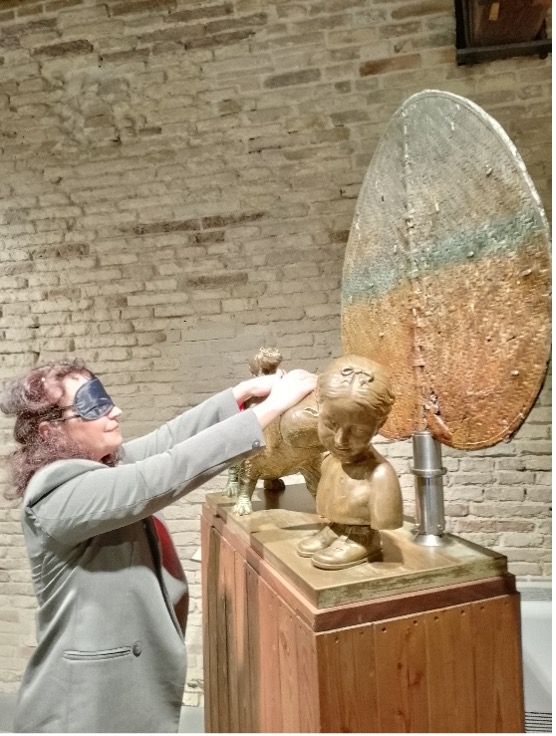
The challenge of Touching Art and Technological Innovation Management Models for a More Inclusive Society

Maria-Gabriella Baldarelli1 , Eleonora Cardillo2

1University of Bologna (Italy), 2University of Catania (Italy)

Rethinking the Role of Cultural Institutions in Times of Uncertainty

The current state of the art presents situations of profound uncertainty for the future due to climate change and war conditions that generate a widespread feeling of fear. Therefore, the need is to rethink the role of public and private organizations and the meaning of creating networks that can lead to positive and hopeful circuits.

Part of the literature positions art as an important antidote to fear. Furthermore, we question the problems of resilience in cultural institutions trying to discover the dynamics that allow the continuation of the use of art works, identifying dimensions that can support it. To try to participate in this debate is important to contribute to investigating relationships between new technologies and fruition management in cultural institutions in order to promote inclusion for a more sustainable society. Cultural institutions, such as museums, play an essential role in generating social inclusion in order to push a broader cultural change.

Technology, Inclusion, and Vulnerability

New technologies are playing an important role in this topic, because the relationships among social integration and technologies are crucial, in order to make the community sensitive regarding vulnerable people with special needs and for the creation of a new paradigm of sustainability. 

Furthermore, many research works are mainly focused on the role of technological innovations in supporting inclusion without specifying the type of “vulnerability”, which instead is very important in making products, including the cultural ones, shared and usable.

Moreover, literature involved digitalization in the context of museums in general, but the aspects concerning inclusion and the possibility, through digitalization, of promoting a broad-spectrum of cultural change are less considered.

Continue reading “The challenge of Touching Art and Technological Innovation Management Models for a More Inclusive Society”
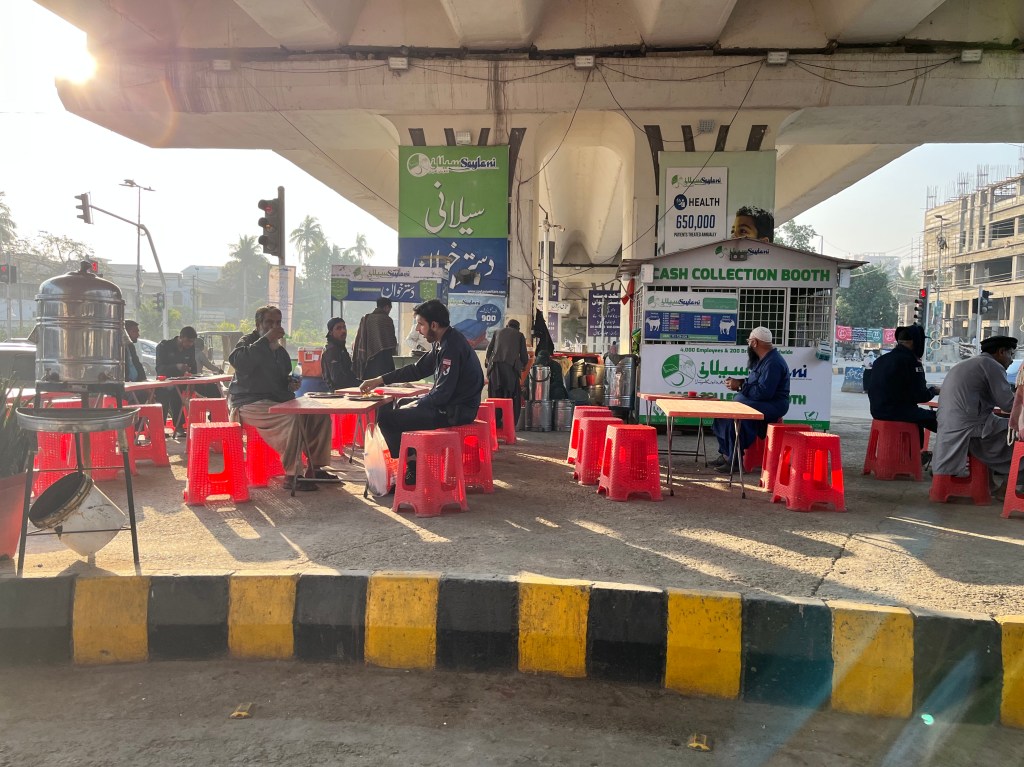

Organizing Civility: Bridging Practices in Islamic Welfare Organization

Sumrin Kalia1 and Gregory Jackson2

1Freie Universität Berlin, Germany, 2King’s College London, UK

Often when we think of non-profits, we tend to focus on efficiency, organizational image, or fundraising. However, these organizations also play an important social role, leaving lasting impacts on the relationships, values, and social boundaries that shape civic life. They can promote inclusion, justice, and enable dialogue across social boundaries, but the opposite may also be true.

What can civil society organizations do to enable a coexistence that values justice over exploitation, cooperation over conflict, and inclusion over exclusion?

This question anchors our recently published article, “Organizing Civility: The Ethics of Adab in an Islamic Welfare Organization”. We look at the case of ‘Saylani Welfare Trust’ an Islamic welfare organization that engages in what we call ‘practices of civility’. Saylani draws inspiration from Sufism a mystical tradition of Islam that emerged in the eighth century.

Continue reading “Organizing Civility: Bridging Practices in Islamic Welfare Organization”

How Can Nonprofits Support Migrant Inclusion in Global Cities?

Yan Long1, Wei Luo2, and Berta Terzieva3

1University of California, Berkeley, USA, 2Peking University, Beijing, China, 3Vienna University of Economics and Business, Austria

In today’s increasingly diverse urban landscapes, nonprofit organizations are often hailed as champions of inclusion—especially for migrant communities. Yet a crucial question remains: are they truly bridging divides, or unintentionally widening gaps? More importantly, under what conditions do they foster inclusion—or reinforce exclusion? Our recent paper in NVSQ sheds light on these complex questions through a relational comparison of nonprofits in Vienna, Austria, and Shenzhen, China. We provide insights into factors that influence how well nonprofits include, reach, and serve migrants in a manner proportionate to their presence in the community.

Continue reading “How Can Nonprofits Support Migrant Inclusion in Global Cities?”

Virtual Philanthropy: Definition and Social Impact

Shihua Ye1, Zhongsheng Wu2, Xiaochen Gong3, Yiming Dai2, and Jieyu Wu1

1Harbin Institute of Technology Shenzhen, China, 2Zhejiang University–Zijingang Campus, Hangzhou, China, 3Beijing University of Chemical Technology, China

Imagine a day where every step, search, ride, game, or online purchase contributes to charity. From Charity Miles to Ecosia, Ant Forest, and to JustPlay, your digital actions are captured, transformed into data, and matched by sponsors to fund real-world charitable causes. This is Virtual Philanthropy, a new form of philanthropy where donations aren’t measured in money or goods, but in digital traces embedded into everyday routines. By lowering barriers and turning ordinary online behaviors into acts of charity, virtual philanthropy democratizes giving and redefines what it means to ‘be a donor’.

Despite the growing prevalence of virtual philanthropy, academia has not established a clear definition or systematic framework for its analysis. Addressing this gap, a recent mixed-method study by YE Shihua, WU Zhongsheng, GONG Xiaochen, DAI Yiming, and WU Jieyu—entitled “Virtual Philanthropy: Exploring Its Definition and Perceived Social Impact Through a Mixed-Method Approach”— represents the first systematic attempt to comprehensively examine this phenomenon. Their study provides a foundational framework to delineate the boundaries, dimensions, characteristics, and associated social impact of virtual philanthropy.

Notably, their study employs a novel approach, a modified snowball sampling method based on ChatGPT, to identify 40 global cases that offer new insights into this new emerging form of philanthropy in the digital era.

Continue reading “Virtual Philanthropy: Definition and Social Impact”