

Photo by Junior Teixeira on pexels.com
Shihua Ye1, Zhongsheng Wu2, Xiaochen Gong3, Yiming Dai2, and Jieyu Wu1
1Harbin Institute of Technology Shenzhen, China, 2Zhejiang University–Zijingang Campus, Hangzhou, China, 3Beijing University of Chemical Technology, China
Imagine a day where every step, search, ride, game, or online purchase contributes to charity. From Charity Miles to Ecosia, Ant Forest, and to JustPlay, your digital actions are captured, transformed into data, and matched by sponsors to fund real-world charitable causes. This is Virtual Philanthropy, a new form of philanthropy where donations aren’t measured in money or goods, but in digital traces embedded into everyday routines. By lowering barriers and turning ordinary online behaviors into acts of charity, virtual philanthropy democratizes giving and redefines what it means to ‘be a donor’.
Despite the growing prevalence of virtual philanthropy, academia has not established a clear definition or systematic framework for its analysis. Addressing this gap, a recent mixed-method study by YE Shihua, WU Zhongsheng, GONG Xiaochen, DAI Yiming, and WU Jieyu—entitled “Virtual Philanthropy: Exploring Its Definition and Perceived Social Impact Through a Mixed-Method Approach”— represents the first systematic attempt to comprehensively examine this phenomenon. Their study provides a foundational framework to delineate the boundaries, dimensions, characteristics, and associated social impact of virtual philanthropy.
Notably, their study employs a novel approach, a modified snowball sampling method based on ChatGPT, to identify 40 global cases that offer new insights into this new emerging form of philanthropy in the digital era.
Defining Virtual Philanthropy
As seen in Figure 1, virtual philanthropy can be treated as a novel type of Internet philanthropy, distinct from real philanthropy (offline and online money donations). It differs from traditional real philanthropy in the nature of the donation, the mechanism of giving, and the scope of beneficiaries.
1.What is donated?
Unlike traditional philanthropy, where donations are typically money, goods, or services, virtual philanthropy focuses on the contribution of digital data. This can be broadly categorized into three types:
Motion data: physical activity tracked through fitness apps, wearable devices, or smart sensors.
Engagement-driven data: interactions on social media, content creation, or participation in online campaigns.
Online transaction records: data generated from e-commerce purchases, browsing behaviors, or other digital consumption.
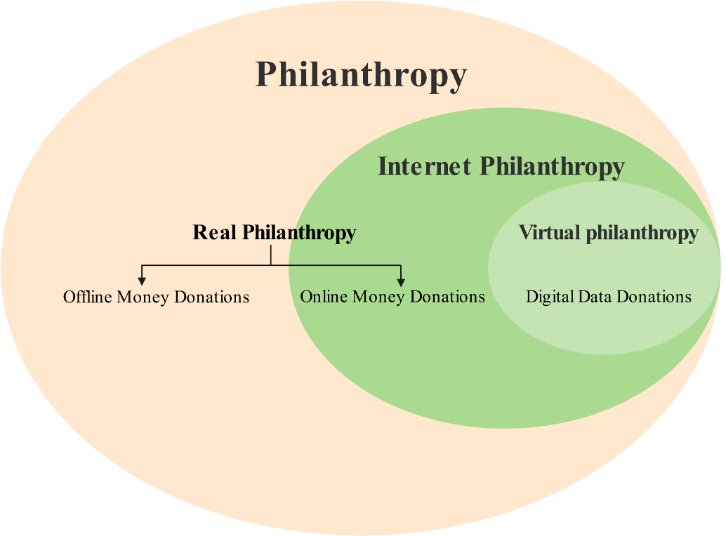
Figure 1 The Boundaries of Virtual Philanthropy
2. How is it donated?
Individuals provide digital data, which is then monetized through matching funds from corporate sponsors, donor communities, or advertising revenue. This process assigns a tangible value to contributions of digital data, effectively turning everyday behaviors into charitable impact. Platforms may also gamify participation, offering rewards, recognition, or points to encourage sustained engagement and maximize contributions.
3. Donate to whom?
When virtual philanthropy initiatives have a specific social mission, donations are directed to the corresponding charitable cause. In the absence of a clearly defined mission, platforms often act as third-party facilitators, pooling contributions to support multiple causes simultaneously. This flexibility broadens the scope of beneficiaries and allows for a larger collective social impact, transforming routine online activities into meaningful acts of giving.
Characteristics of Virtual Philanthropy Initiatives
1. Gamification: Game-like features engage users by combining intrinsic motivations, such as a sense of achievement, self-expression, learning, and social interaction, with extrinsic rewards like points, badges, virtual gifts, and leaderboards. Gamification makes charitable actions enjoyable, sustaining participation and attracting new users.
2. Public Benefits: Virtual philanthropy initiatives balance altruism with personal incentives. Some platforms appeal purely to public good, while others integrate private rewards such as virtual currency, points, or membership perks. This dual approach increases participation and engages individuals who may not be motivated by altruism alone.
3. Stickiness: Regular engagement is encouraged through daily tasks and cumulative behaviors, from step-count donations to quizzes or online games. High-stickiness designs, such as Ant Forest, reward daily activity that directly links to charitable outcomes, while other platforms focus on one-off actions. Stickiness fosters long-term involvement and civic awareness.
Pathways to Social Impact of Virtual Philanthropy Initiatives
Based on fuzzy-set Qualitative Comparative Analysis, their study also identifies three primary pathways through which virtual philanthropy cases achieve social impact.
1. Gamified Public-Benefit Path: This path combines high gamification with altruistic motivations to maximize engagement. Tencent Games’ Peach Blossom Spring is a prime example: players cultivate a virtual farm and convert in-game rewards into donations for child hunger relief. Immersive gameplay, milestone achievements, and intrinsic and extrinsic rewards generated contributions equivalent to 21.25 million nutritious meals during China’s 2023 Charity Day.
2. Sticky Public-Benefit Path: Focused on sustained engagement and public-benefit motivation, this path embeds philanthropy into daily routines. Ant Forest and Ant Manor encourage participants to engage in daily and cumulative actions—planting virtual trees, raising chickens, or completing quizzes—which are converted into real-world charitable contributions. By rewarding consistent and enduring efforts, these cases foster long-term civic engagement and collective impact.
3. Ad Revenue with Single-Cause Path: Some initiatives leverage advertising revenue to support a single charitable cause. Ecosia, a climate-focused search engine, channels profits from advertisement into global tree-planting projects, planting over 50 million trees by 2023. Despite lower level of gamification and stickiness, this straightforward approach demonstrates that clear cause alignment and reliable revenue generation can also create substantial social impact.
Benefits and Challenges
1. Benefits of Virtual Philanthropy
Virtual philanthropy transforms everyday behaviors into meaningful social contributions through giving of digital data. It broadens access to charitable giving, leverages gamification to sustain engagement, and fosters collaboration among users, platforms, and communities. By reframing philanthropy as data-driven rather than resource-based, virtual philanthropy expands both the scopeand context of participation, making charitable action more inclusive and accessible in the digital era.
2. Challenges of Virtual Philanthropy
Despite its long-term promise, virtual philanthropy also faces significant ethical and privacy concerns in the current stage. Digital data may be exploited for profits, reflecting trends of ‘surveillance capitalism’. The collection of vast behavioral datasets increases the risk of privacy breaches, particularly in initiatives led by major tech companies. Effective oversight, regulation, and ethical governance are essential to ensure that virtual philanthropy benefits society without compromising user trust or personal data security.
Click here to read the free full-text article: Ye, S., Wu, Z., Gong, X., Dai, Y., & Wu, J. (2025). Virtual Philanthropy: Exploring Its Definition and Perceived Social Impact Through a Mixed-Method Approach. Nonprofit and Voluntary Sector Quarterly, 0(0). https://doi.org/10.1177/08997640251375968
 NVSQ Blog